
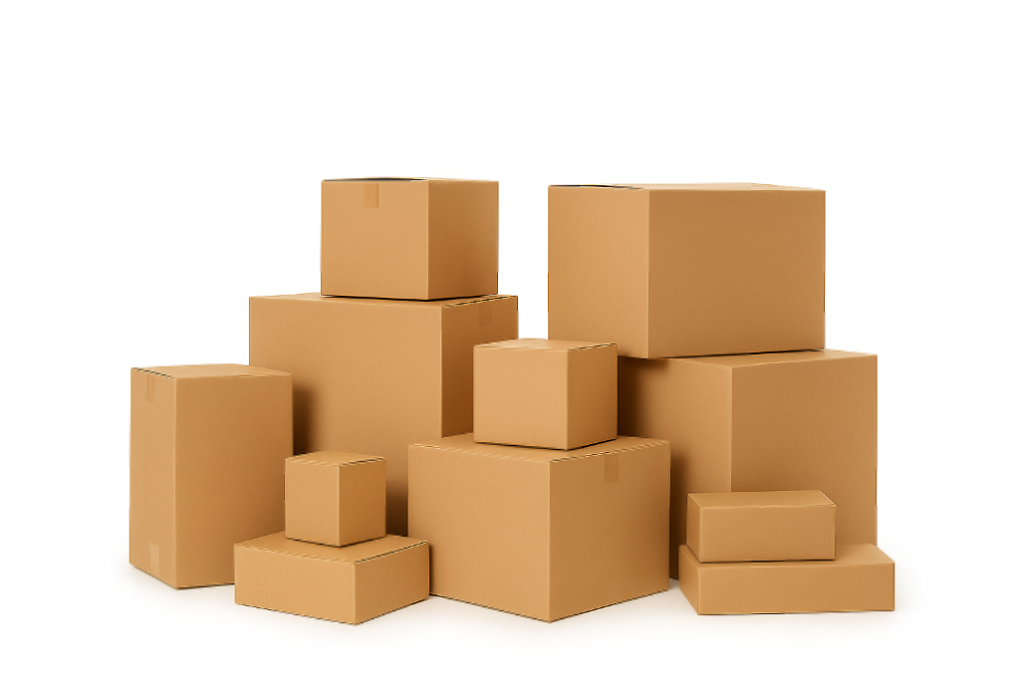
RSC cardboard boxes are often chosen because they are standard, cost-effective, and widely available. What is less obvious is how much impact they can have on productivity when they are properly specified and used. In operations that handle volume, packaging is not just about protecting products. It directly influences how fast items are packed, how efficiently space is used, and how stable shipments remain from origin to destination.
When packaging decisions are aligned with real operational needs, RSC cardboard boxes become part of the system that supports efficiency. When they are not, they tend to create friction that slows down processes and increases costs in ways that are not immediately visible.
How RSC Cardboard Boxes Improve Packing Speed
Packing efficiency is usually where the impact of RSC cardboard boxes becomes visible first. Their simple structure allows for quick assembly and sealing, which is essential in environments where speed and consistency matter. Unlike more complex formats, RSC boxes follow a predictable folding pattern, reducing the need for training or adjustment during the packing process.
This consistency becomes even more valuable when teams are working at scale. Boxes that open cleanly, hold their shape, and close without resistance allow workers to maintain a steady rhythm. When packaging is inconsistent, even small issues like misaligned flaps or uneven folds can slow down the process and create variation between packed units.
Another factor is how well the box fits the product. When dimensions are properly defined, the need for excessive filler is reduced, which speeds up packing and improves presentation. A well-fitted cardboard box protects the product while also simplifying the workflow, since fewer adjustments are needed during each packing cycle.
Storage Efficiency Starts with Box Design
Storage is often treated as a separate issue, but it is directly connected to how cardboard boxes are designed and produced. RSC cardboard boxes with consistent dimensions allow for more efficient stacking, which helps maximize vertical space and maintain stability over time. This is especially important in warehouse environments where space utilization directly impacts cost.
Uniformity across batches also plays a key role. When boxes vary slightly in size or strength, stacks become less stable and harder to manage. This leads to wasted space, increased handling, and a higher risk of collapse. On the other hand, when boxes are consistent, storage becomes more predictable and easier to organize.
Flat shipping is another advantage of RSC cardboard boxes. They can be stored efficiently before use, reducing the amount of space required for packaging inventory. This becomes particularly relevant for businesses that purchase in volume, where packaging itself can take up a significant portion of storage capacity.
Shipping Performance and Cost Control
Shipping is where all previous decisions come together. The way cardboard boxes perform during transport determines whether products arrive in good condition and whether additional costs are created along the way. RSC cardboard boxes are designed to distribute weight evenly, which helps maintain structure during stacking and movement.
When boxes are properly specified, they reduce the risk of deformation and product damage. This has a direct impact on returns, replacements, and overall customer satisfaction. Poor packaging choices often lead to hidden costs that are only noticed after shipments start failing under real conditions.
There is also a cost dimension tied to efficiency. Well-designed cardboard boxes optimize how space is used within trucks and containers. When boxes stack cleanly and maintain their shape, more products can be transported in the same shipment, reducing logistics costs per unit. Over time, this becomes a significant advantage for businesses that operate at scale.
Key Factors That Drive Efficiency in RSC Cardboard Boxes
The performance of RSC cardboard boxes depends on how well they are aligned with the operation. A few factors consistently influence whether they improve efficiency or create unnecessary friction:
- Box dimensions: Proper sizing reduces empty space and minimizes the need for filler;
- Board strength: Adequate structural support ensures stability during stacking and transport;
- Consistency: Uniform production across batches improves predictability in packing and storage;
- Ease of assembly: Boxes that fold and close easily support faster packing workflows;
- Print clarity: Clear labeling helps with identification, handling, and scanning in logistics environments.
When these elements are considered together, packaging becomes a tool for efficiency rather than just a requirement. Ignoring one of them often leads to adjustments later in the process, which increases both time and cost.
Where Efficiency Actually Shows Up in Daily Operations
The impact of RSC cardboard boxes becomes clear when you look at how they behave during a full day of use. In high-volume environments, efficiency is not measured by one action, but by repetition. A box that saves a few seconds during packing, stacks more cleanly, or reduces small adjustments during transport ends up making a noticeable difference over hundreds or thousands of units.
For example, when boxes are consistent in size and structure, pallet building becomes faster and more stable without needing constant correction. When they hold their shape under weight, there is less need to double-stack cautiously or redistribute loads. These are not isolated improvements. They reduce friction across the entire workflow, allowing teams to maintain speed without compromising stability or product protection.
This is where packaging stops being a passive element and becomes part of operational performance. Instead of reacting to issues, businesses that use well-specified cardboard boxes tend to operate with fewer interruptions, which is what ultimately drives efficiency at scale.
Custom RSC Boxes in Langley
Efficient operations depend on packaging that performs consistently in real conditions. Racer Boxes works with businesses across British Columbia and Washington to deliver custom RSC cardboard boxes designed for reliability, accuracy, and performance at scale. If you are looking to improve packing speed, optimize storage, and reduce shipping costs, get in touch with our team and we will be glad to help you define the right solution for your operation.