Blueberries are one of the most sensitive products to handle at scale. They respond quickly to pressure, moisture, and movement, and small issues during handling tend to show up later as reduced shelf life or inconsistent quality. When damage appears, it is often attributed to transport conditions, but in most cases, the process starts breaking down earlier, during packing and palletizing.
For blueberry farms in Langley, this becomes more critical during peak season. Harvest speed increases, volume grows, and decisions made at the packaging level begin to influence everything that follows. At that point, cardboard produce boxes are no longer just a container. They shape how the product behaves throughout the entire flow, from field to final delivery.
Where Damage Actually Starts in the Process
Damage in transit is usually the result of accumulated stress rather than a single failure point. Blueberries are handled multiple times in a short period, and each stage adds a layer of pressure, movement, or environmental exposure. When the packaging does not support those transitions properly, the fruit begins to degrade before the shipment even leaves the facility.
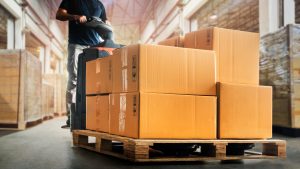
One common issue is how pallets are built under time pressure. During peak harvest, boxes are stacked quickly, often without time for adjustment. If the packaging does not hold its shape consistently, weight distribution becomes uneven and the load shifts more easily during transport. This creates internal movement that is not always visible but affects the fruit over time.
Another problem comes from how boxes interact with storage conditions. Even when cooling systems are working properly, inconsistent airflow within the pallet can create pockets of moisture. Some areas remain stable while others retain humidity, leading to uneven product quality within the same shipment. By the time the boxes are opened, the issue looks like a transport failure, even though it started during storage.
What Changes When Packaging Supports the Operation
When cardboard produce boxes are aligned with real operating conditions, the impact shows up across the workflow, not just at the moment of packing. Instead of requiring constant adjustment, the packaging supports consistency, which reduces the number of small interventions needed throughout the process.
In practice, this means pallets can be built faster without sacrificing stability. Boxes behave predictably when stacked, which allows teams to maintain speed without second-guessing how the load will hold. During transport, the shipment remains more stable, which reduces internal movement and lowers the risk of product shifting under pressure.
There is also a noticeable difference during transitions between stages. Moving product from field to storage, from storage to loading, and from loading to transport involves repeated handling. When boxes are easier to grip and reposition, those transitions become smoother and less disruptive. The result is not just fewer visible errors, but a more controlled process overall.
What Blueberry Farms Should Evaluate Before Ordering Produce Boxes
Choosing cardboard produce boxes becomes more effective when decisions are tied directly to how the operation runs, rather than to general packaging assumptions. A few factors consistently influence how well the packaging performs once it is in use:
- Harvest rhythm: faster operations need boxes that can be assembled, filled, and stacked without slowing down the process;
- Pallet behavior: boxes should create stable loads without requiring constant adjustment during stacking;
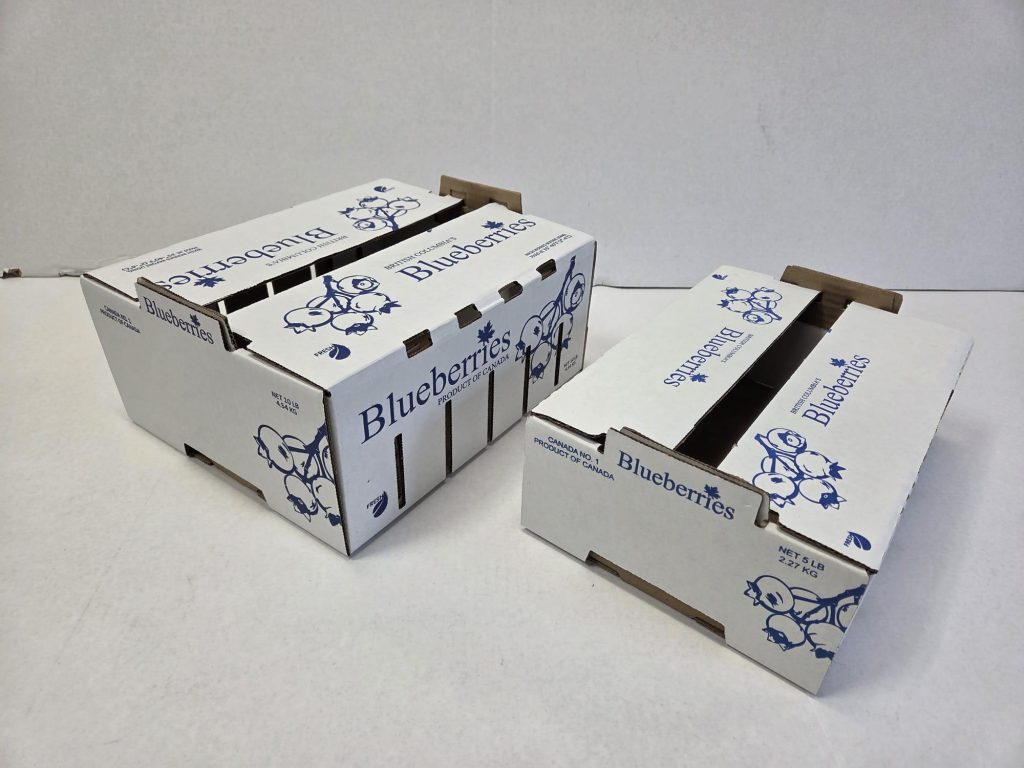
- Storage interaction: packaging should allow consistent airflow across the pallet, not just within individual boxes;
- Handling frequency: the more a box is moved, the more important grip and structural consistency become;
- Load predictability: repeat orders should behave the same way, so teams do not need to adapt each time.
For example, a farm that packs quickly during peak hours benefits from boxes that hold their shape without adjustment, allowing pallets to be built continuously. Another operation that relies heavily on cold storage may prioritize airflow across stacked units to maintain consistent conditions. In both cases, the packaging decision is tied to how the system operates, not just to the product itself.
How Small Inefficiencies Turn Into Product Loss
Most packaging-related losses do not come from obvious failures. They come from small inefficiencies that repeat over time. A box that shifts slightly during stacking, a pallet that requires constant correction, or a load that does not remain stable during transport will gradually affect the product without creating a single clear point of failure.
These issues are difficult to track because they do not happen all at once. They build over the course of handling, storage, and movement. By the time the fruit reaches its destination, the result appears as general quality loss rather than as a specific packaging problem. This is why packaging decisions need to be evaluated in context, looking at how they influence the entire process rather than isolated moments.
Cardboard Produce Boxes for Blueberry Farms
Preventing damage in transit starts with understanding how blueberries move through the operation and where stress accumulates along the way. The right cardboard produce boxes help stabilize that process, reducing variability and supporting more consistent handling from harvest to delivery.
Racer Boxes works with farms and produce businesses across British Columbia to provide corrugated produce boxes designed for real conditions. If you are preparing for the blueberry season in Langley and want to improve how your shipments perform, our team can help you define the right solution for your operation, get in touch!