

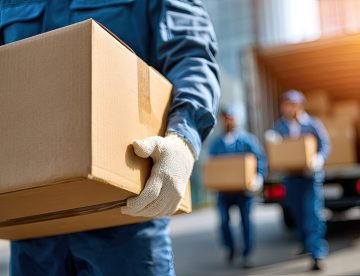
A box that works perfectly for deliveries around Vancouver can start showing problems as soon as the same product is shipped across the country. That does not necessarily mean the original packaging was poorly designed. It may simply have been designed for a very different journey.
Local deliveries are often relatively predictable. Products may leave a warehouse, travel in the same vehicle for a few hours, and arrive directly at a store or customer. Shipping across Canada can introduce sorting facilities, transfers between vehicles, longer periods in storage, repeated handling, and more time spent underneath or beside other packages. When the route changes, the demands placed on the cardboard box change with it.
Boxes In Vancouver Can Have Very Different Jobs
When businesses first contact us about packaging, understanding where a box is going is just as important as knowing what will be inside it. Two companies shipping identical products could need different corrugated packaging simply because one delivers locally using its own vehicles while the other sends orders to customers throughout Canada.
Consider a Vancouver food producer supplying independent retailers in the Lower Mainland. Orders might be packed at the facility in the morning, loaded into a company van, and delivered directly to several stores that afternoon. Employees control how the cartons are loaded, drivers know what they are carrying, and the boxes may only be stacked once before reaching their destination. A packaging design that performs consistently under those conditions is doing exactly what it was intended to do.
If that producer later begins accepting wholesale orders from Alberta, Ontario, or Quebec, the product has not changed, but the distribution system has. Those cartons may now spend days moving through a carrier network, be transferred several times, sit in distribution facilities, and encounter loads the business cannot control. Simply continuing to order the same box because “we’ve never had a problem with it” ignores the fact that the box has effectively been given a new job.
Distance Is Not Usually The Biggest Difference
It is tempting to assume that a cross-country shipment requires different packaging simply because it travels farther. Mileage alone, however, tells us surprisingly little about what happens to a carton. A box can travel hundreds of kilometres in a controlled palletized load and experience less handling than one travelling a much shorter distance through several parcel facilities.
What matters is the shipping path. A locally delivered carton may remain in the same orientation from packing table to customer. A parcel shipment can move from conveyor to truck, truck to terminal, terminal to another conveyor, and eventually into a delivery vehicle. Along the way, it can be placed on different sides, pushed against other packages, or temporarily carry weight from cartons that were never part of the shipper’s original stacking plan.
This is why we want to know how a customer intends to ship before recommending changes to the packaging. If orders will remain palletized until they reach a distributor, we may be thinking about compression and pallet stability. If individual boxes enter a parcel network, repeated handling and movement inside the carton become much more important. “Shipping across Canada” describes the destination, but the route to that destination tells us far more about what the box will actually experience.
The First Failure Often Happens Inside The Box
When businesses begin shipping farther, they sometimes respond to damage by immediately asking for thicker or stronger corrugated cardboard. Sometimes additional strength is appropriate, but external damage is only part of the equation. The product may be moving inside a perfectly intact carton.
Imagine a company that sells small metal components and has successfully delivered them to local industrial customers for years. The cartons arrive looking fine because the boxes remain upright and employees pack them carefully into company vehicles. Once those same products begin travelling individually through a carrier network, the empty space that never caused trouble locally becomes much more significant. Components can shift repeatedly, concentrate their weight against one wall, and eventually damage each other or the carton from the inside.
In a situation like that, simply increasing board strength may treat the wrong problem. Adjusting dimensions, changing how products are arranged, adding appropriate internal components, or dividing the contents can sometimes make a greater difference. Before changing the box specification, we want to understand exactly what failed and where. A crushed corner, a split seam, an intact carton containing damaged goods, and a box that has lost its shape under stacking pressure are four different clues, not four versions of the same packaging problem.
What To Review Before Expanding Your Shipping Area
Businesses do not need to wait for damaged shipments to start evaluating their packaging. If you already know that products previously delivered locally will soon be travelling farther, a few practical details can help us determine whether the current boxes should remain unchanged or be reconsidered.
- Follow one shipment from the packing table to destination. Do not look only at the distance on a map. Identify whether the carton remains palletized, enters a parcel network, changes vehicles, passes through distribution centres, or is handled individually along the way. This gives us a much more realistic picture of the stresses the package may encounter.
- Look at how much unused space exists inside the current box. A small amount of movement that causes no issue during controlled local delivery can become significant after repeated handling. Pay particular attention to heavy, irregularly shaped, fragile, or multi-piece products.
- Record how cartons are stacked before and during transportation. A box sitting on top of a local delivery load has a very different experience from one placed near the bottom of a pallet or temporarily stacked beneath unrelated shipments. Weight, stack height, and time under load are useful information when evaluating corrugated construction.
- Keep damaged packaging instead of throwing it away immediately. Photographs are helpful, but an actual failed box can tell us much more. Where the board buckled, tore, punctured, or lost shape can help identify whether the issue relates to compression, movement, impact, closure, or another part of the packaging system.
- Test the packed box, not an empty sample. The relationship between the product and the carton matters. Assemble the packaging exactly as employees would for a real order, including inserts, dividers, void fill, tape, and the actual quantity of product. A box that feels sturdy when empty can behave very differently once weight is concentrated inside it.
Doing this before a major expansion can also help avoid overcorrecting. Not every business moving from local delivery to national shipping needs an entirely new packaging lineup. Sometimes the existing box is already suitable, while a particular product or shipping method requires an adjustment. The useful question is not whether national shipping automatically requires “stronger boxes,” but which conditions have actually changed.
Boxes In Vancouver
If your business is expanding from local delivery into regional or cross-country shipping, bring us your current packaging and tell us how those new orders will travel. Racer Boxes can review the products, existing boxes, packing process, and distribution route to identify what may need to change and what can stay exactly as it is. Contact our team before your next packaging order, and we can help you prepare boxes for the journeys your products are actually going to make.
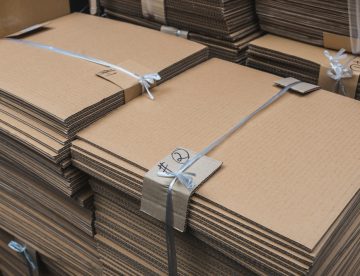
If you’re searching for RSC shipping boxes in Langley, BC, you’re in one of the best locations in the province. Langley is a growing hub for e-commerce, manufacturing, agriculture, and distribution businesses – all of which rely on durable, cost-effective corrugated packaging.
RSC boxes are the industry standard for shipping because they are:
- Cost-efficient
- Strong and stackable
- Easy to assemble
- Ideal for palletized transport
- Available in single-wall and double-wall options
Whether you’re a small online seller or a large-scale distributor, choosing the right local supplier can reduce shipping damage, lower costs, and improve fulfillment efficiency.
Below are 5 RSC shipping box suppliers in Langley, including our team at Racer Boxes.
RSC Box Suppliers in Langley
1. Racer Boxes (Langley, BC)
Specialty: Custom RSC box manufacturing & bulk supply
Racer Boxes is a dedicated cardboard box manufacturer in Langley specializing in high-quality RSC shipping cartons for businesses across BC. Unlike resellers, Racer Boxes focuses on direct manufacturing, which means better pricing, faster turnaround, and consistent quality control.
What Makes Racer Boxes Different?
- Custom RSC sizes (made-to-order)
- Single-wall & double-wall corrugated
- Bulk wholesale pricing
- Short production timelines
- Local pickup or delivery options
- Custom printing available
Racer Boxes works with:
- E-commerce brands
- Food distributors
- Moving companies
- Industrial manufacturers
- 3PL & logistics companies
If you need reliable, strong, and cost-effective RSC cartons in Langley, Racer Boxes provides scalable solutions tailored to your shipping volume.
2. Great Little Box Company (GLBC)
Specialty: Custom packaging & branded corrugated solutions
Great Little Box Company is a well-known BC packaging manufacturer offering corrugated boxes, retail packaging, and custom-printed cartons. They serve businesses that require branded packaging along with structural design services.
Best for:
- Custom-printed RSC boxes
- Large-scale packaging programs
- Retail-ready packaging
3. Westkey Packaging Ltd.
Specialty: Custom corrugated box manufacturing
Westkey Packaging manufactures corrugated cartons and specialty packaging. They provide structural design services and support various industries across Metro Vancouver.
Best for:
- Custom structural corrugated designs
- Large production runs
- Industrial packaging
4. Langley Box & Carton Supply
Specialty: Stock shipping cartons & packaging supplies
This type of supplier focuses more on stock-size RSC cartons and packaging materials for businesses needing quick availability.
Best for:
- Standard-size RSC boxes
- Small batch purchases
- Quick supply needs
5. Cascades Recovery + (BC Operations)
Specialty: Sustainable corrugated packaging
Cascades is known for environmentally responsible corrugated packaging solutions and recycled materials.
Best for:
- Eco-friendly RSC boxes
- Large-volume distribution
- Corporate packaging programs
Comparison of RSC Box Suppliers in Langley
Supplier | Custom Sizes | Bulk Pricing | Printing Available | Ideal For | Manufacturing Focus |
Racer Boxes | ✔ Yes | ✔ Wholesale | ✔ Yes | E-commerce, Industrial, Movers | Direct Manufacturer |
GLBC | ✔ Yes | ✔ Yes | ✔ Yes | Branded Retail Packaging | Large-Scale Manufacturer |
Westkey Packaging | ✔ Yes | ✔ Yes | Limited | Industrial Packaging | Manufacturer |
Langley Box Supply | Limited | Moderate | No | Small Businesses | Distributor |
Cascades | ✔ Yes | ✔ Large Volume | Limited | Sustainable Programs | Corporate Manufacturer |
Why Buy RSC Boxes from a Local Langley Manufacturer?
Buying locally offers major advantages:
- Faster lead times
- Lower shipping costs
- Better quality control
- Easier reorders
- In-person consultations
- Support for local business
For growing businesses in Langley and across BC, working with a local RSC manufacturer like Racer Boxes ensures flexibility and consistent supply – especially during peak seasons.
What to Consider Before Buying RSC Shipping Boxes
Before placing your order, consider:
1. Box Strength (ECT or Burst Rating)
Ensure the corrugated strength matches your product weight.
2. Single-Wall vs Double-Wall
Double-wall is ideal for heavier or fragile products.
3. Custom Sizing
Custom sizing reduces void fill and shipping costs.
4. Printing Needs
Do you need branding or handling instructions printed?
5. Order Volume
Bulk ordering significantly reduces per-unit cost.
Get Reliable RSC Shipping Boxes in Langley
If you’re looking for dependable, cost-effective RSC shipping boxes in Langley, working directly with a manufacturer gives you better control over quality, pricing, and turnaround time.
Racer Boxes specializes in producing durable, custom RSC cartons tailored to your business requirements – whether you need 100 boxes or 10,000+ per month.
Contact our team today to discuss your packaging needs and receive a custom quote tailored to your business.
Industrial packaging plays a vital role in the global supply chain, ensuring that heavy-duty goods reach their destination safely and intact. However, as businesses adapt to a changing world, there’s a growing demand for packaging solutions that meet both the strength requirements of industrial products and the environmental standards valued by today’s consumers. Balancing durability…
As global e-commerce continues to expand, the ability to prepare and ship orders internationally becomes crucial for merchants aiming to grow their markets. The process involves more than just selecting a courier and shipping products; it requires strategic preparation to ensure that items arrive in excellent condition, and navigating through various international logistics challenges. As…
Victoria in BC is one of the most visited places in the province, attracting hundreds of people who go there to have a great time. By having such great tourism attractions, small businesses, and local producers can leverage this opportunity and enhance their sales spreading their local products along with the country or even overseas….