

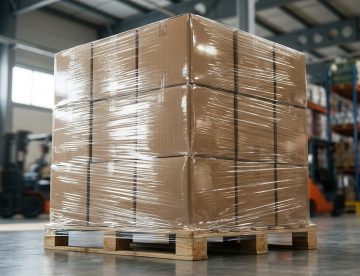
Growth creates challenges that businesses usually expect, such as hiring more staff, expanding inventory, or finding additional warehouse space. Packaging rarely makes that list. Many companies continue using the same cardboard box strategy they developed years earlier, assuming that if products are arriving safely, everything is working as intended. In reality, packaging systems often become outdated long before anyone notices. The operation keeps moving, but it becomes increasingly dependent on workarounds that quietly reduce efficiency.
The reason this happens is simple. Packaging decisions are rarely revisited once they have been implemented. New products are introduced, shipping volumes increase, customer requirements evolve, and storage layouts change, but the cardboard boxes remain largely the same. Eventually, the business is no longer operating with a packaging system. It is operating with years of small decisions layered on top of one another, each one reasonable on its own but inefficient when viewed as a whole.
When Yesterday's Solution Starts Creating Today's Problems
A specialty food distributor in British Columbia provides a good example of how this happens. The company originally carried only a handful of products, so having several custom cardboard box sizes worked well. As the business expanded into new retail accounts and added seasonal product lines, every new launch received its own box. Nobody questioned the approach because each decision solved an immediate need.
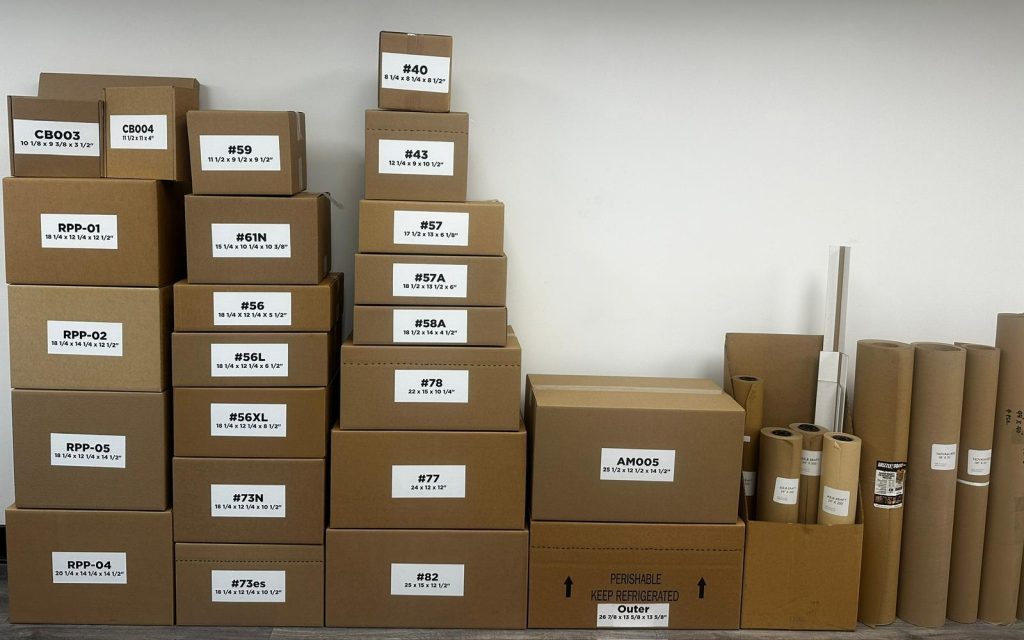
Several years later, the warehouse contained more than a dozen similar cardboard box sizes. Some differed by less than an inch, yet each required its own storage location, purchasing schedule, and inventory count. During busy weeks, employees regularly walked back and forth comparing labels because multiple cartons looked nearly identical while stored flat. When the correct size was temporarily unavailable, another box was used instead. The shipment still left the building, but it required more filler, occupied more pallet space, and took longer to pack than necessary.
The biggest surprise was not how much money the company spent on cardboard boxes. It was how much time disappeared every day because the packaging system had quietly become more complicated than the business actually needed. Once management reviewed the entire operation instead of individual products, they consolidated several sizes into a smaller group of versatile cartons. The result was not only easier purchasing, but also faster packing, simpler storage, and fewer daily decisions for warehouse staff.
The Warning Signs Usually Appear Long Before Companies Notice
Most businesses outgrow their packaging gradually rather than all at once. The early signs rarely show up in financial reports because they appear as small interruptions throughout the day. Warehouse teams adapt to them so naturally that they stop questioning whether those extra steps should exist in the first place. There are several indicators that suggest it may be time to review your cardboard box strategy:
- Your packaging inventory grows faster than your product line. Adding a new box for every new product eventually creates unnecessary complexity. In many cases, several products can be grouped into a smaller number of carefully selected box sizes without sacrificing protection.
- Packing teams regularly substitute one box for another. If employees frequently say, “This one should work,” the packaging system is probably no longer supporting consistent operations. Temporary substitutions often become permanent habits that increase shipping costs and reduce pallet efficiency.
- Warehouse staff spend too much time looking for the correct carton. This usually happens when there are too many similar SKUs or when packaging has been added over several years without reorganizing the storage layout.
- Seasonal demand creates packaging confusion every year. Businesses that experience harvest seasons, holiday peaks, or promotional campaigns often discover that last year’s emergency solutions become this year’s standard practice. Instead of solving the underlying issue, the operation simply learns to work around it.
- Purchasing decisions are driven by history instead of current operations. Ordering the same cardboard boxes every year because “that’s what we’ve always done” often prevents businesses from noticing that shipping methods, product mix, and customer expectations have changed significantly.
Looking at these warning signs together is far more useful than evaluating each one independently. A business may be able to compensate for one or two inefficiencies, but when several appear simultaneously, they usually point to a packaging system that has not evolved alongside the company.
A Better Packaging System Is Usually Simpler, Not Bigger
Many business owners assume that growth naturally requires more packaging options. In practice, experienced operations often move in the opposite direction. As companies become more sophisticated, they typically look for opportunities to simplify rather than expand. The objective is to reduce unnecessary decisions, create consistency, and allow the warehouse to operate more predictably under pressure.
That does not mean forcing every product into the same cardboard box. It means identifying where standardization improves efficiency without compromising protection. A manufacturer may discover that four carefully designed custom cartons replace seven older sizes. A retailer may realize that redesigning one frequently used box eliminates the need for excessive filler across several product categories. A food producer may switch to dimensions that stack more efficiently on standard pallets, improving both storage and transportation without changing the products themselves.
These improvements rarely happen by accident. They come from reviewing the packaging system as a whole instead of evaluating one box at a time. Businesses that periodically step back and ask whether their packaging still reflects the way they operate today often discover opportunities that have been hiding in plain sight for years.
Cardboard Boxes in Vancouver
A growing business deserves a packaging system that grows with it. Racer Boxes works with companies across British Columbia to design custom cardboard boxes that support changing product lines, improve warehouse organization, and simplify day-to-day operations. If your packaging decisions are starting to feel more complicated than they should, our team can help you evaluate your current system and develop cardboard box solutions that are better suited to the way your business operates today. Get in touch for a free estimate!
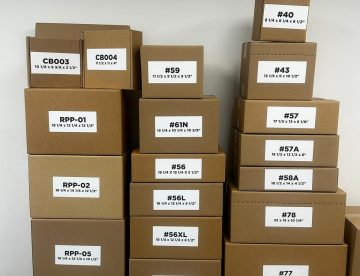
Most businesses think about cardboard boxes only after the product is already defined. The focus usually goes to dimensions, shipping costs, or basic protection requirements. Storage tends to become an afterthought, something that gets addressed only once operations start feeling crowded or inefficient. By then, the problem is harder to solve because the packaging is already integrated into the workflow.
What many businesses realize too late is that cardboard boxes directly shape how space is used inside a warehouse or packing facility. The right packaging decisions improve organization, simplify handling, and allow operations to scale more efficiently. Poorly planned packaging, on the other hand, creates friction that spreads across storage, packing, and shipping at the same time.
Why Box Standardization Improves Storage Efficiency
One of the biggest operational advantages of well-designed cardboard boxes is consistency. Businesses that use standardized packaging formats usually operate more efficiently because storage becomes more predictable. Pallets stack more cleanly, shelving layouts work more effectively, and teams spend less time adjusting or reorganizing inventory throughout the day.
This becomes especially important in facilities where multiple products move through the same packing stations. When cardboard boxes vary too much in size or structure, storage areas become fragmented and difficult to organize efficiently. Workers end up constantly repositioning inventory, separating partial stacks, or adapting pallet layouts to compensate for inconsistent packaging dimensions.
Standardization does not mean forcing every product into the same box. It means reducing unnecessary variation and selecting box formats that work together operationally. Businesses that approach packaging this way tend to use warehouse space more effectively because the boxes support the layout instead of disrupting it.
Another major advantage comes from flat-packed storage. RSC cardboard boxes are designed to store compactly before assembly, which helps businesses keep larger packaging inventories without sacrificing excessive floor space. For companies that order in volume, this creates more flexibility during seasonal peaks or periods of increased demand.
How the Right Cardboard Boxes Improve Daily Workflow
Storage efficiency is closely connected to workflow efficiency. Packaging that is easy to access, easy to assemble, and easy to stack reduces interruptions throughout the operation. These improvements may seem small individually, but they repeat constantly during the day, which is why they have such a large cumulative effect over time.
A well-designed cardboard box supports the entire process around it. Boxes that hold their shape consistently stack more reliably during storage and shipping. Packaging that fits products properly reduces unnecessary filler and simplifies packing. Consistent dimensions also make pallet building faster because workers do not need to compensate for shifting or uneven loads.
There are several practical packaging decisions that tend to improve storage and operational flow significantly:
- Choosing box sizes that stack efficiently on standard pallets and shelving;
- Reducing unnecessary variation between similar packaging formats;
- Using board strength that maintains structure during long-term stacking;
- Separating high-volume packaging SKUs from specialty or seasonal sizes;
- Planning packaging inventory around operational peaks instead of average usage.
For example, businesses that frequently reorder slightly different custom sizes often discover that their storage areas become harder to organize over time. Similar-looking cardboard boxes with inconsistent dimensions create confusion during packing and reduce stacking efficiency. Companies that consolidate packaging into more strategic size groups usually gain efficiency not because they use fewer boxes, but because the entire operation becomes more organized and predictable.
Where Packaging Starts Affecting Larger Operational Costs
Storage inefficiency rarely appears as a single visible expense. It usually spreads across labor, shipping, handling, and warehouse utilization. When teams spend more time navigating around packaging inventory or adjusting unstable stacks, those small delays accumulate across the operation.
The effects become even more noticeable during busy periods. Seasonal businesses often increase packaging orders quickly without considering how the additional inventory will move through the facility. If cardboard boxes are not designed and planned with storage flow in mind, temporary overflow areas start appearing around packing stations, loading zones, or warehouse aisles. Once this happens, packaging begins competing with operations for space instead of supporting them.
Shipping efficiency is also connected to these decisions. Cardboard boxes that stack consistently and use pallet space effectively help maximize trailer capacity and reduce unnecessary movement during transport. Businesses sometimes focus heavily on the unit cost of packaging while overlooking how much packaging design influences the efficiency of the larger logistics system.
Boxes in Vancouver
The right cardboard boxes do more than protect products during shipping. They influence how efficiently businesses store inventory, build pallets, manage workflows, and scale operations over time. Racer Boxes works with businesses across British Columbia to create packaging solutions designed for real operational conditions, helping companies improve both storage efficiency and shipping performance.
If your current packaging setup is starting to create unnecessary friction in your workflow, our team can help you develop cardboard box solutions that make better use of your space and support long-term growth.