

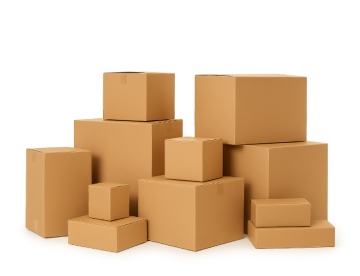
RSC cardboard boxes are often chosen because they are standard, cost-effective, and widely available. What is less obvious is how much impact they can have on productivity when they are properly specified and used. In operations that handle volume, packaging is not just about protecting products. It directly influences how fast items are packed, how efficiently space is used, and how stable shipments remain from origin to destination.
When packaging decisions are aligned with real operational needs, RSC cardboard boxes become part of the system that supports efficiency. When they are not, they tend to create friction that slows down processes and increases costs in ways that are not immediately visible.
How RSC Cardboard Boxes Improve Packing Speed
Packing efficiency is usually where the impact of RSC cardboard boxes becomes visible first. Their simple structure allows for quick assembly and sealing, which is essential in environments where speed and consistency matter. Unlike more complex formats, RSC boxes follow a predictable folding pattern, reducing the need for training or adjustment during the packing process.
This consistency becomes even more valuable when teams are working at scale. Boxes that open cleanly, hold their shape, and close without resistance allow workers to maintain a steady rhythm. When packaging is inconsistent, even small issues like misaligned flaps or uneven folds can slow down the process and create variation between packed units.
Another factor is how well the box fits the product. When dimensions are properly defined, the need for excessive filler is reduced, which speeds up packing and improves presentation. A well-fitted cardboard box protects the product while also simplifying the workflow, since fewer adjustments are needed during each packing cycle.
Storage Efficiency Starts with Box Design
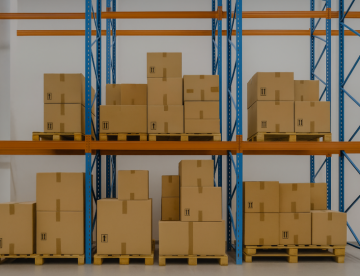
Storage is often treated as a separate issue, but it is directly connected to how cardboard boxes are designed and produced. RSC cardboard boxes with consistent dimensions allow for more efficient stacking, which helps maximize vertical space and maintain stability over time. This is especially important in warehouse environments where space utilization directly impacts cost.
Uniformity across batches also plays a key role. When boxes vary slightly in size or strength, stacks become less stable and harder to manage. This leads to wasted space, increased handling, and a higher risk of collapse. On the other hand, when boxes are consistent, storage becomes more predictable and easier to organize.
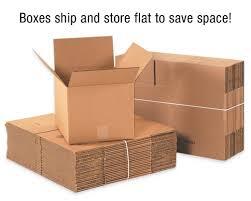
Flat shipping is another advantage of RSC cardboard boxes. They can be stored efficiently before use, reducing the amount of space required for packaging inventory. This becomes particularly relevant for businesses that purchase in volume, where packaging itself can take up a significant portion of storage capacity.
Shipping Performance and Cost Control
Shipping is where all previous decisions come together. The way cardboard boxes perform during transport determines whether products arrive in good condition and whether additional costs are created along the way. RSC cardboard boxes are designed to distribute weight evenly, which helps maintain structure during stacking and movement.
When boxes are properly specified, they reduce the risk of deformation and product damage. This has a direct impact on returns, replacements, and overall customer satisfaction. Poor packaging choices often lead to hidden costs that are only noticed after shipments start failing under real conditions.
There is also a cost dimension tied to efficiency. Well-designed cardboard boxes optimize how space is used within trucks and containers. When boxes stack cleanly and maintain their shape, more products can be transported in the same shipment, reducing logistics costs per unit. Over time, this becomes a significant advantage for businesses that operate at scale.
Key Factors That Drive Efficiency in RSC Cardboard Boxes
The performance of RSC cardboard boxes depends on how well they are aligned with the operation. A few factors consistently influence whether they improve efficiency or create unnecessary friction:
- Box dimensions: Proper sizing reduces empty space and minimizes the need for filler;
- Board strength: Adequate structural support ensures stability during stacking and transport;
- Consistency: Uniform production across batches improves predictability in packing and storage;
- Ease of assembly: Boxes that fold and close easily support faster packing workflows;
- Print clarity: Clear labeling helps with identification, handling, and scanning in logistics environments.
When these elements are considered together, packaging becomes a tool for efficiency rather than just a requirement. Ignoring one of them often leads to adjustments later in the process, which increases both time and cost.
Where Efficiency Actually Shows Up in Daily Operations
The impact of RSC cardboard boxes becomes clear when you look at how they behave during a full day of use. In high-volume environments, efficiency is not measured by one action, but by repetition. A box that saves a few seconds during packing, stacks more cleanly, or reduces small adjustments during transport ends up making a noticeable difference over hundreds or thousands of units.
For example, when boxes are consistent in size and structure, pallet building becomes faster and more stable without needing constant correction. When they hold their shape under weight, there is less need to double-stack cautiously or redistribute loads. These are not isolated improvements. They reduce friction across the entire workflow, allowing teams to maintain speed without compromising stability or product protection.
This is where packaging stops being a passive element and becomes part of operational performance. Instead of reacting to issues, businesses that use well-specified cardboard boxes tend to operate with fewer interruptions, which is what ultimately drives efficiency at scale.
Custom RSC Boxes in Langley
Efficient operations depend on packaging that performs consistently in real conditions. Racer Boxes works with businesses across British Columbia and Washington to deliver custom RSC cardboard boxes designed for reliability, accuracy, and performance at scale. If you are looking to improve packing speed, optimize storage, and reduce shipping costs, get in touch with our team and we will be glad to help you define the right solution for your operation.
Ordering custom RSC boxes is often treated as a straightforward step. The format is familiar, widely used, and easy to specify at a basic level. That simplicity is exactly what leads many businesses to overlook how much these decisions affect day-to-day operations. Once the boxes are in use, they stop being a line item and become part of the system that supports packing, storage, and delivery.
Most of the problems companies experience with cardboard boxes do not come from manufacturing errors. They are usually the result of decisions made too quickly at the ordering stage, without considering how the packaging will perform in real conditions. When volume increases, those small oversights turn into recurring issues that impact efficiency, product protection, and overall consistency.
Where Most RSC Box Orders Break Down in Practice
A common mistake is defining the box only by its dimensions. While size is essential, it does not determine how the box behaves once it is filled, stacked, and moved. A box can technically fit the product and still fail when exposed to weight, pressure, or repeated handling. This is especially noticeable in operations where boxes are palletized and transported over longer distances, where structural stability becomes critical.
Another frequent issue is selecting board strength based on price rather than performance. Lower grade cardboard may reduce cost per unit, but it often leads to deformation during stacking or transport. These failures rarely show up immediately. They appear when boxes are used at scale, which is when the cost of replacing damaged products or adjusting operations becomes much higher than the initial savings.
Printing decisions also tend to create problems when they are not adapted to corrugated material. Designs that rely on small text, fine lines, or low contrast often lose clarity when printed on cardboard. The result is packaging that feels inconsistent with the brand’s intended image. Since these boxes are often the first physical interaction with the product, the impact of poor print execution is more significant than it appears at the design stage.
How to Define the Right Specifications from the Start
Avoiding these issues requires treating cardboard boxes as part of a system rather than a standalone purchase. The objective is to ensure that packaging supports how the product moves through the operation, from packing to storage to delivery. When specifications are defined with that perspective, the result is a solution that performs consistently under real conditions.
There are several factors that should always be considered together when ordering custom RSC boxes:
- Product characteristics: weight, shape, and fragility determine the level of structural support required
- Packing workflow: boxes should be easy to assemble and close without creating friction in the process
- Stacking conditions: consistent sizing and adequate strength are essential for pallet stability
- Transport exposure: longer or more complex routes increase the need for durability and resistance to pressure
- Printing application: graphics and text should be designed for clarity on corrugated surfaces
- Order planning: maintaining consistency across batches reduces variation and improves operational predictability
Looking at these elements in isolation often leads to incomplete decisions. When they are evaluated together, the packaging becomes more reliable and better aligned with actual use.
Why Execution and Consistency Matter More Than Expected
Even when the specifications are correct, execution determines whether the boxes will perform as intended. RSC boxes depend on precision in cutting, folding, and printing, and small variations tend to show up only when the boxes are used at scale. A slight difference in height, for example, can make pallets uneven, which leads to shifting during transport and increases the risk of damage, even if the box itself seems structurally sound.
These issues also appear quickly in the packing process. If the scoring is inconsistent, some boxes will fold easily while others resist or don’t align properly when closing. In practice, this slows down the team, creates variation between packed units, and forces workers to compensate manually. Over a full day of packing, that small inconsistency turns into lost time and reduced efficiency.
Printing execution can create similar friction. If labels or product information are not consistently aligned or clear, teams may struggle to identify products quickly or scan barcodes without repositioning the box. This becomes especially problematic in warehouses or distribution environments where speed and accuracy are critical.
Consistency becomes even more important with repeat orders. If one batch stacks well and the next compresses slightly under weight, teams need to adjust how they build pallets or handle boxes, even though nothing officially changed. That kind of variability is hard to track but easy to feel in daily operations.
A simple way to avoid this is to test boxes in real conditions before scaling the order. Fill them, stack them, and move them the same way your team would during a normal day. This reveals issues early and ensures that what works in a sample will work in practice.
Custom RSC Boxes in Langley
RSC boxes may follow a simple structure, but their performance depends on how well they are specified and produced. Racer Boxes works with businesses across British Columbia and Washington to deliver custom RSC boxes with consistent quality, accurate printing, and reliable performance in real conditions. If you are planning your next order and want to avoid the common issues that affect packaging at scale, our team can help you define a solution that fits your operation. Get in touch!

When it comes to packaging solutions, businesses often come across two common options — RSC (Regular Slotted Container) boxes and die-cut boxes. Both are popular choices in the packaging world, but each serves a distinct purpose depending on your product type, shipping needs, and branding goals. Understanding their differences will help you choose the most efficient and cost-effective option for your business.
Let’s explore how RSC and die-cut boxes differ and which one might be the perfect fit for your packaging requirements.
What Are RSC Boxes?
RSC boxes, short for Regular Slotted Containers, are the most common and widely used corrugated boxes in shipping and packaging. They’re designed with four main flaps — two on the top and two on the bottom — that meet in the center when closed.
These boxes are manufactured in standard sizes and are shipped flat, making them cost-efficient, durable, and easy to assemble with minimal effort.
Key Features of RSC Boxes:
- Made from durable corrugated cardboard
- Ideal for bulk shipping and storage
- Economical and easy to produce in large quantities
- Require minimal assembly (just tape and fold)
- Available in a wide range of standard sizes
Best Uses:
RSC boxes are perfect for e-commerce packaging, industrial shipments, moving boxes, and warehouse storage. If you’re looking for a straightforward, sturdy, and budget-friendly packaging solution, RSC boxes are an excellent choice.
What Are Die-Cut Boxes?
Die-cut boxes are custom-designed packaging solutions made using a steel cutting die that allows for unique shapes, dimensions, and designs. Unlike standard RSC boxes, die-cut boxes can be tailored to fit your product precisely, offering a professional and branded appearance.
These boxes can include custom features like handles, windows, tuck-in flaps, partitions, or inserts, making them highly versatile and visually appealing.
Key Features of Die-Cut Boxes:
- Fully customizable shape and size
- Enhances branding with print and design options
- Can include special features for convenience or aesthetics
- Provides snug product protection with minimal void space
- Great for retail display and presentation
Best Uses:
Die-cut boxes are perfect for product packaging, retail displays, gift boxes, and subscription boxes — any situation where presentation and product fit matter.
RSC Boxes vs. Die-Cut Boxes: A Quick Comparison
Feature | RSC Boxes | Die-Cut Boxes |
Design | Standard, rectangular | Custom shapes and sizes |
Cost | More economical | Higher upfront cost (custom die) |
Assembly | Simple (tape required) | May require folding or locking tabs |
Customization | Limited | Fully customizable |
Purpose | Shipping and storage | Retail packaging and branding |
Visual Appeal | Basic and functional | Stylish and eye-catching |
Which Box Should You Choose?
Your choice between RSC and die-cut boxes depends on your business goals and packaging priorities.
- Choose RSC boxes if you need affordable, durable, and efficient packaging for shipping or bulk storage.
- Choose die-cut boxes if you want custom-designed, attractive packaging that enhances your product presentation and strengthens your brand identity.
Many businesses use both — RSC boxes for transportation and die-cut boxes for product display or retail sales.
Why Choose Racer Boxes for Your Packaging Needs?
We specialize in manufacturing high-quality corrugated boxes – from standard RSC boxes to fully customized die-cut packaging solutions. With years of industry experience, we help businesses across Vancouver and beyond find the perfect packaging that balances cost, protection, and presentation.
Whether you need bulk shipping boxes or custom-printed retail packaging, we can design, manufacture, and deliver boxes that fit your exact requirements – on time and within budget.
Looking for the right packaging solution for your business?
Racer Boxes is here to help you choose the perfect box that balances cost, functionality, and presentation.
Contact Us Today to discuss your packaging requirements or request a custom quote!
When it comes to product storage, shipping, or organizing inventory, RSC Boxes (Regular Slotted Containers) are one of the most reliable and cost-effective packaging solutions available. From warehouses to retail stores to e-commerce businesses, RSC Boxes Packaging is preferred because of its durability, stackability, and versatility.
But simply using boxes isn’t enough—the real efficiency comes from how you use them.
In this blog, we’ll share 5 proven tips to maximize storage efficiency using RSC Boxes, explore the benefits of using RSC Boxes, and explain why choosing the right RSC Boxes manufacturing partner—like Racer Boxes in Richmond—can make a huge difference in your storage operations.
What Are RSC Boxes & Why Are They Popular?
RSC Boxes are the most common type of corrugated packaging, designed with flaps of equal length that meet at the center when folded.
Why people search for them:
- “Best storage boxes for warehouse”
- “Strong boxes for shipping”
- “Affordable packaging for business”
Key advantages:
- Cost-effective
- Easy to assemble
- Highly stackable
- Ideal for automation
- Available in custom sizes
Now, let’s look at how to get the most out of them.
Tip 1: Choose the Right Size for Your Products
One of the biggest mistakes in storage management is using boxes that are too big or too small.
Why size matters:
- Too much empty space → wasted storage area & higher shipping cost
- Too small → product damage or overfilling
Smart Strategy:
Work with an RSC Boxes manufacturing company that offers custom sizing to perfectly match your products. This helps in maximizing shelf space and improving pallet configuration for storage or transport.
Learn More: What Are RSC Boxes and How They’re Used in Packaging
Tip 2: Optimize Vertical Space with Stackable RSC Boxes
One of the biggest benefits of using RSC Boxes is their excellent stackability. When used correctly, they allow you to fully utilize vertical storage space without compromising product safety.
How to stack efficiently:
- Place heavier boxes at the bottom
- Use consistent box sizes for stable stacking
- Avoid overhanging edges
- Use pallet patterns (e.g., column or interlocking stacking)
Pro Tip: Double-wall RSC Boxes are ideal for stacking in high-density storage environments.
Tip 3: Label and Organize Boxes for Easy Access
Poor labeling causes confusion, slows down order picking, and increases handling time.
Use these labeling best practices:
- Print product name or SKU on the box
- Use color-coded labels by category
- Add “fragile,” “top load only,” or “this side up” instructions if needed
- Ensure labels are visible from 2+ sides
Result: Faster inventory management and improved warehouse workflow.
Tip 4: Use RSC Boxes Packaging for Multi-Purpose Storage
RSC Boxes are incredibly versatile. You can use them beyond shipping—for storage, sorting, display, or even internal logistics.
How businesses maximize efficiency with RSC Boxes:
- Store raw materials and finished goods
- Create pick-and-pack stations
- Organize seasonal products
- Reuse boxes where possible to reduce cost
Added Benefit: RSC Boxes Packaging helps maintain a clean, uniform, and professional storage environment.
Tip 5: Choose High-Quality Boxes from a Reliable Manufacturer
Not all boxes are equal. The strength, material quality, and precision of RSC Boxes manufacturing directly affect storage efficiency.
Signs of low-quality boxes:
- Boxes collapse when stacked
- Flimsy or uneven flaps
- Poor glue or weak seams
- Inconsistent sizing
Why choose a professional box manufacturer like Racer Boxes (Richmond):
✔ Custom sizes & printing
✔ Single or double wall options
✔ Eco-friendly corrugated material
✔ Consistent quality for large quantities
✔ Faster lead times for local businesses
When your boxes are durable and standardized, storage becomes safer, cleaner, and more organized.
Bonus Tip: Use RSC Boxes to Reduce Costs & Waste
Efficient storage isn’t just about saving space—it’s about saving money.
Cost-saving advantages of using RSC Boxes:
- Lightweight but strong → Lower shipping costs
- Reusable and recyclable → Eco-friendly and budget-friendly
- Compatible with automation → Faster packing and stacking
- Customizable → No need for excess filler material
Smart businesses know: A well-designed RSC Box can replace multiple types of packaging, simplifying storage and logistics.
Why RSC Boxes Are the Best Storage Solution
Let’s sum up the major benefits of using RSC Boxes:
Highly stackable → Maximizes warehouse space
Customizable sizes → Reduces wasted volume
Durable and protective → Prevents product damage
Easy to label and organize → Faster workflow
Affordable and eco-friendly → Better long-term ROI
In short, RSC Boxes Packaging = storage efficiency + cost savings + better organization.
Looking for Reliable RSC Boxes Manufacturing in Richmond?
If you want high-quality, custom-made RSC Boxes that improve your storage strategy, Racer Boxes is your trusted local partner in Richmond.
We specialize in:
RSC Boxes Manufacturing
Custom Corrugated Packaging
Bulk Packaging Solutions
Fast Turnaround & Local Delivery
Eco-Friendly, High-Durability Boxes
Whether you’re a warehouse, retailer, moving company, or e-commerce brand—we create the perfect boxes to maximize your storage efficiency and reduce costs.
Let’s Build Better Boxes for Better Storage!
Ready to optimize your storage with high-quality RSC Boxes?
Call us and create the perfect packaging solution for your business.
When it comes to reliable and cost-effective packaging, RSC Boxes—also known as Regular Slotted Cartons—remain one of the most popular choices for businesses across industries. Their durability, versatility, and affordability make them ideal for everything from product storage to global shipping. Understanding the types of RSC Boxes and their specific applications can help you choose the best RSC Boxes packaging solution for your business.
What Are RSC Boxes?
RSC Boxes (Regular Slotted Containers) are corrugated boxes designed with uniform flaps that meet in the center when folded. They are easy to assemble, strong enough for transport, and cost-efficient to produce. The RSC Boxes manufacturing process ensures high-quality materials and precise cutting, resulting in boxes that are durable and consistent in performance.
Common Types of RSC Boxes
Below are the most widely used types of RSC Boxes, each designed for specific applications and packaging requirements:
1. Standard RSC Boxes
This is the most common design used in RSC Boxes packaging solutions. All flaps are the same length and meet at the center. They are perfect for general-purpose use, shipping, and storage.
Applications: E-commerce packaging, retail shipments, and warehouse storage.
2. Half-Slotted RSC Boxes (HSC)
In this type, the top flaps are removed, leaving an open-top container. The box can be combined with a separate lid or tray.
Applications: Ideal for retail displays, easy-access storage, and transporting products that don’t require full closure.
3. Overlap RSC Boxes (OSC)
Here, the outer flaps overlap completely when closed, adding extra strength and protection. This design is commonly used for heavy or fragile items.
Applications: Shipping machinery parts, electronics, and products requiring added stacking strength.
4. Full Overlap RSC Boxes (FOL)
In Full Overlap RSC Boxes, the outer flaps completely overlap each other, doubling the protection on the top and bottom. This provides greater cushioning and rigidity.
Applications: Industrial goods, metal parts, or delicate equipment that needs reinforced protection during transit.
5. Double-Walled RSC Boxes
These boxes are made using two layers of corrugated board for maximum durability. The RSC Boxes manufacturing process for these uses high-strength materials suitable for heavy-duty use.
Applications: Export packaging, fragile goods, and long-distance transportation.
6. Die-Cut RSC Boxes
A custom-shaped variant made using die-cutting technology for specific product dimensions. These are often branded or printed for marketing purposes.
Applications: Custom product packaging, promotional shipments, and branded e-commerce packaging.
Benefits of Using RSC Boxes
- Cost-Effective: Easy to produce and assemble.
- Versatile: Multiple types of RSC Boxes available for varied needs.
- Sustainable: Made from recyclable corrugated cardboard.
- Reliable: Excellent for protecting products during storage and shipping.
Choosing the Right RSC Boxes Packaging Solution
Selecting the right RSC Boxes packaging solution depends on your product size, weight, and shipping requirements. Standard RSC boxes work well for general use, while full overlap or double-walled options are better for heavy-duty applications. Always consult a trusted RSC Boxes manufacturing company to ensure your packaging is both durable and cost-effective.
Final Thoughts
RSC Boxes remain the foundation of modern packaging for their flexibility, strength, and environmental benefits. Whether you need a standard carton for e-commerce or a reinforced design for industrial use, understanding the types of RSC Boxes will help you choose the best RSC Boxes packaging solution for your business.
If you’re searching for premium-quality RSC Boxes and want reliable RSC Boxes packaging solutions, look no further than Racer Boxes. We specialize in RSC Boxes manufacturing, offering durable, eco-friendly, and customizable packaging options that fit your business needs perfectly.
Contact Racer Boxes today to get top-quality RSC packaging that protects your products, enhances your brand, and delivers exceptional value!