

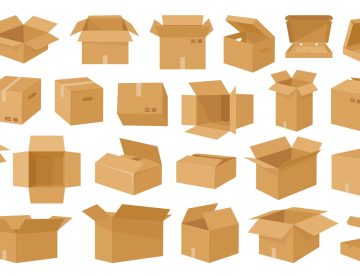
Ordering custom cardboard boxes is an exciting step for any growing business. It usually means generic stock cartons are no longer meeting operational needs and the company is ready for packaging designed specifically for its products. The mistake is that many businesses arrive at that stage already thinking about box dimensions, printing, and finishes, when the most important part of the project has not even been discussed yet.
The best custom packaging projects rarely start with the question, “What size box do we need?” They start with understanding how the business actually works. How are products sold? How are they packed? Who receives them? Where are they stored? Those answers often change the entire direction of the project, and they regularly lead to solutions that customers had not considered before walking through the door.
Many Businesses Design Around Products Instead Of Orders
One business that contacted us was preparing to launch a new line of gourmet sauces through its online store. Before discussing cardboard grades or printing options, we asked a simple question: how do customers usually buy these products? The owner assumed the obvious starting point was designing a custom box for a single bottle because that was the product they manufactured.
After reviewing recent sales, a different picture emerged. Individual bottles were available, but most customers actually purchased gift bundles or mixed assortments containing three, four, or six bottles. Designing packaging around one bottle would have forced warehouse staff to combine several individual boxes inside larger shipping cartons for the majority of orders. The company would have ended up buying more packaging materials, spending more time packing each shipment, and managing more inventory than necessary.
Instead, the project was redesigned around the way customers actually placed orders. The business still received packaging tailored to its products, but the real improvement came from matching the packaging to purchasing behaviour rather than to a single item sitting on a table. Looking at sales patterns before designing the first box prevented a problem that would have affected every order leaving the warehouse.
The Packaging Process Starts Long Before Shipping
Another misconception is that a custom box only needs to perform well once it leaves the building. Shipping is important, but it’s only one part of the box’s working life. Before reaching a truck, every carton has already been delivered by the manufacturer, stored flat, moved around the warehouse, assembled, filled, sealed, and prepared for pickup. If any of those steps become unnecessarily difficult, employees repeat that inefficiency hundreds or thousands of times throughout the year.
We worked with a manufacturer that initially requested one oversized custom box because they wanted a single solution capable of handling almost every product they sold. It sounded practical until we visited their operation and watched employees prepare orders. The larger cartons occupied considerably more storage space, required more material to assemble, and slowed packing because staff constantly adjusted the contents to prevent products from moving around inside.
Rather than simply producing the box they requested, we reviewed how packaging moved through their facility from the moment flat cartons arrived until finished orders were loaded for delivery. That conversation led to a smaller family of standardized box sizes that occupied less warehouse space, reduced unnecessary handling, and simplified packing without making inventory more complicated. None of those improvements were related to freight damage. They came from understanding everything that happened before shipping even began.
The Most Valuable Conversations Often Have Nothing To Do With Cardboard
By the time businesses ask for a quotation, they often believe they’ve already solved the important decisions. In our experience, that’s usually when the most useful part of the project begins. Good packaging isn’t created by choosing a stronger board or adding custom printing. It comes from asking questions that reveal how the business operates today and where it’s heading next.
Some of the questions that regularly reshape a project include:
- Will your product line grow over the next few years? A box designed around today’s catalogue may become limiting much sooner than expected.
- Do different customers order the same products in different ways? Wholesale, retail, and e-commerce orders often benefit from different packaging strategies even when the products are identical.
- How much warehouse space can realistically be dedicated to packaging? Ordering more box sizes is not always the most efficient solution if storage is already limited.
- Which packaging decisions create extra work every day? Small frustrations repeated hundreds of times often cost more than businesses realize.
These conversations frequently change the final recommendation because they shift the focus away from the box itself and toward the business using it.
The First Production Run Is Not The Time To Discover Problems
Many businesses spend weeks discussing dimensions, materials, and artwork, assuming the project is ready once the specifications are approved. In reality, some of the most valuable lessons only appear when people start assembling boxes, packing products, and preparing actual orders.
We remember working with a company launching a premium candle collection that planned to have tissue paper, protective inserts, promotional cards, and multiple fragrance options inside every box. Everything looked excellent on paper. Once we walked through the packing process with them, it became obvious that employees needed to perform too many separate steps for every order. As sales increased, that extra time would quickly become a bottleneck.
Instead of simply producing the original design, we adjusted the insert layout and simplified how the contents fit together. None of those changes affected the customer’s experience after opening the package, but they made the packing process significantly faster and more consistent. Looking beyond the box itself and thinking about the people assembling hundreds of orders every week prevented a small design decision from becoming a daily operational problem.
Custom Cardboard Boxes
At Racer Boxes, we work closely with businesses across British Columbia to understand how their products move through the entire operation before recommending a packaging solution. Whether you’re ordering custom cardboard boxes for the first time or replacing a system that no longer supports your growth, our team can help you develop packaging that improves efficiency, supports your brand, and continues adding value long after the first shipment leaves your facility. Click here to get in touch.
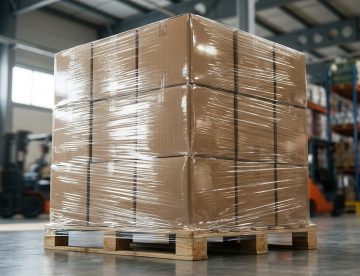
Growth creates challenges that businesses usually expect, such as hiring more staff, expanding inventory, or finding additional warehouse space. Packaging rarely makes that list. Many companies continue using the same cardboard box strategy they developed years earlier, assuming that if products are arriving safely, everything is working as intended. In reality, packaging systems often become outdated long before anyone notices. The operation keeps moving, but it becomes increasingly dependent on workarounds that quietly reduce efficiency.
The reason this happens is simple. Packaging decisions are rarely revisited once they have been implemented. New products are introduced, shipping volumes increase, customer requirements evolve, and storage layouts change, but the cardboard boxes remain largely the same. Eventually, the business is no longer operating with a packaging system. It is operating with years of small decisions layered on top of one another, each one reasonable on its own but inefficient when viewed as a whole.
When Yesterday's Solution Starts Creating Today's Problems
A specialty food distributor in British Columbia provides a good example of how this happens. The company originally carried only a handful of products, so having several custom cardboard box sizes worked well. As the business expanded into new retail accounts and added seasonal product lines, every new launch received its own box. Nobody questioned the approach because each decision solved an immediate need.
Several years later, the warehouse contained more than a dozen similar cardboard box sizes. Some differed by less than an inch, yet each required its own storage location, purchasing schedule, and inventory count. During busy weeks, employees regularly walked back and forth comparing labels because multiple cartons looked nearly identical while stored flat. When the correct size was temporarily unavailable, another box was used instead. The shipment still left the building, but it required more filler, occupied more pallet space, and took longer to pack than necessary.
The biggest surprise was not how much money the company spent on cardboard boxes. It was how much time disappeared every day because the packaging system had quietly become more complicated than the business actually needed. Once management reviewed the entire operation instead of individual products, they consolidated several sizes into a smaller group of versatile cartons. The result was not only easier purchasing, but also faster packing, simpler storage, and fewer daily decisions for warehouse staff.
The Warning Signs Usually Appear Long Before Companies Notice
Most businesses outgrow their packaging gradually rather than all at once. The early signs rarely show up in financial reports because they appear as small interruptions throughout the day. Warehouse teams adapt to them so naturally that they stop questioning whether those extra steps should exist in the first place. There are several indicators that suggest it may be time to review your cardboard box strategy:
- Your packaging inventory grows faster than your product line. Adding a new box for every new product eventually creates unnecessary complexity. In many cases, several products can be grouped into a smaller number of carefully selected box sizes without sacrificing protection.
- Packing teams regularly substitute one box for another. If employees frequently say, “This one should work,” the packaging system is probably no longer supporting consistent operations. Temporary substitutions often become permanent habits that increase shipping costs and reduce pallet efficiency.
- Warehouse staff spend too much time looking for the correct carton. This usually happens when there are too many similar SKUs or when packaging has been added over several years without reorganizing the storage layout.
- Seasonal demand creates packaging confusion every year. Businesses that experience harvest seasons, holiday peaks, or promotional campaigns often discover that last year’s emergency solutions become this year’s standard practice. Instead of solving the underlying issue, the operation simply learns to work around it.
- Purchasing decisions are driven by history instead of current operations. Ordering the same cardboard boxes every year because “that’s what we’ve always done” often prevents businesses from noticing that shipping methods, product mix, and customer expectations have changed significantly.
Looking at these warning signs together is far more useful than evaluating each one independently. A business may be able to compensate for one or two inefficiencies, but when several appear simultaneously, they usually point to a packaging system that has not evolved alongside the company.
A Better Packaging System Is Usually Simpler, Not Bigger
Many business owners assume that growth naturally requires more packaging options. In practice, experienced operations often move in the opposite direction. As companies become more sophisticated, they typically look for opportunities to simplify rather than expand. The objective is to reduce unnecessary decisions, create consistency, and allow the warehouse to operate more predictably under pressure.
That does not mean forcing every product into the same cardboard box. It means identifying where standardization improves efficiency without compromising protection. A manufacturer may discover that four carefully designed custom cartons replace seven older sizes. A retailer may realize that redesigning one frequently used box eliminates the need for excessive filler across several product categories. A food producer may switch to dimensions that stack more efficiently on standard pallets, improving both storage and transportation without changing the products themselves.
These improvements rarely happen by accident. They come from reviewing the packaging system as a whole instead of evaluating one box at a time. Businesses that periodically step back and ask whether their packaging still reflects the way they operate today often discover opportunities that have been hiding in plain sight for years.
Cardboard Boxes in Vancouver
A growing business deserves a packaging system that grows with it. Racer Boxes works with companies across British Columbia to design custom cardboard boxes that support changing product lines, improve warehouse organization, and simplify day-to-day operations. If your packaging decisions are starting to feel more complicated than they should, our team can help you evaluate your current system and develop cardboard box solutions that are better suited to the way your business operates today. Get in touch for a free estimate!
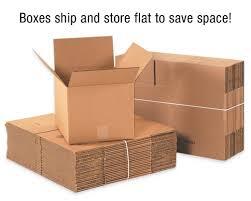
Ordering custom RSC boxes is often treated as a straightforward step. The format is familiar, widely used, and easy to specify at a basic level. That simplicity is exactly what leads many businesses to overlook how much these decisions affect day-to-day operations. Once the boxes are in use, they stop being a line item and become part of the system that supports packing, storage, and delivery.
Most of the problems companies experience with cardboard boxes do not come from manufacturing errors. They are usually the result of decisions made too quickly at the ordering stage, without considering how the packaging will perform in real conditions. When volume increases, those small oversights turn into recurring issues that impact efficiency, product protection, and overall consistency.
Where Most RSC Box Orders Break Down in Practice
A common mistake is defining the box only by its dimensions. While size is essential, it does not determine how the box behaves once it is filled, stacked, and moved. A box can technically fit the product and still fail when exposed to weight, pressure, or repeated handling. This is especially noticeable in operations where boxes are palletized and transported over longer distances, where structural stability becomes critical.
Another frequent issue is selecting board strength based on price rather than performance. Lower grade cardboard may reduce cost per unit, but it often leads to deformation during stacking or transport. These failures rarely show up immediately. They appear when boxes are used at scale, which is when the cost of replacing damaged products or adjusting operations becomes much higher than the initial savings.
Printing decisions also tend to create problems when they are not adapted to corrugated material. Designs that rely on small text, fine lines, or low contrast often lose clarity when printed on cardboard. The result is packaging that feels inconsistent with the brand’s intended image. Since these boxes are often the first physical interaction with the product, the impact of poor print execution is more significant than it appears at the design stage.
How to Define the Right Specifications from the Start
Avoiding these issues requires treating cardboard boxes as part of a system rather than a standalone purchase. The objective is to ensure that packaging supports how the product moves through the operation, from packing to storage to delivery. When specifications are defined with that perspective, the result is a solution that performs consistently under real conditions.
There are several factors that should always be considered together when ordering custom RSC boxes:
- Product characteristics: weight, shape, and fragility determine the level of structural support required
- Packing workflow: boxes should be easy to assemble and close without creating friction in the process
- Stacking conditions: consistent sizing and adequate strength are essential for pallet stability
- Transport exposure: longer or more complex routes increase the need for durability and resistance to pressure
- Printing application: graphics and text should be designed for clarity on corrugated surfaces
- Order planning: maintaining consistency across batches reduces variation and improves operational predictability
Looking at these elements in isolation often leads to incomplete decisions. When they are evaluated together, the packaging becomes more reliable and better aligned with actual use.
Why Execution and Consistency Matter More Than Expected
Even when the specifications are correct, execution determines whether the boxes will perform as intended. RSC boxes depend on precision in cutting, folding, and printing, and small variations tend to show up only when the boxes are used at scale. A slight difference in height, for example, can make pallets uneven, which leads to shifting during transport and increases the risk of damage, even if the box itself seems structurally sound.
These issues also appear quickly in the packing process. If the scoring is inconsistent, some boxes will fold easily while others resist or don’t align properly when closing. In practice, this slows down the team, creates variation between packed units, and forces workers to compensate manually. Over a full day of packing, that small inconsistency turns into lost time and reduced efficiency.
Printing execution can create similar friction. If labels or product information are not consistently aligned or clear, teams may struggle to identify products quickly or scan barcodes without repositioning the box. This becomes especially problematic in warehouses or distribution environments where speed and accuracy are critical.
Consistency becomes even more important with repeat orders. If one batch stacks well and the next compresses slightly under weight, teams need to adjust how they build pallets or handle boxes, even though nothing officially changed. That kind of variability is hard to track but easy to feel in daily operations.
A simple way to avoid this is to test boxes in real conditions before scaling the order. Fill them, stack them, and move them the same way your team would during a normal day. This reveals issues early and ensures that what works in a sample will work in practice.
Custom RSC Boxes in Langley
RSC boxes may follow a simple structure, but their performance depends on how well they are specified and produced. Racer Boxes works with businesses across British Columbia and Washington to deliver custom RSC boxes with consistent quality, accurate printing, and reliable performance in real conditions. If you are planning your next order and want to avoid the common issues that affect packaging at scale, our team can help you define a solution that fits your operation. Get in touch!
Choosing the right packaging materials is crucial when you’re starting to ship products online. Not only does it impact the safety and presentation of your items, but it also plays a significant role in customer satisfaction and your brand’s reputation. While there are various materials to consider, cardboard boxes stand out as a versatile, reliable,…
In today’s competitive marketplace, standing out is more important than ever. Custom cardboard boxes have become a vital tool for businesses looking to enhance their marketing and branding efforts. More than just a means of delivering products, custom cardboard boxes serve as a canvas for creativity and a vehicle for brand messaging. As a leading…