

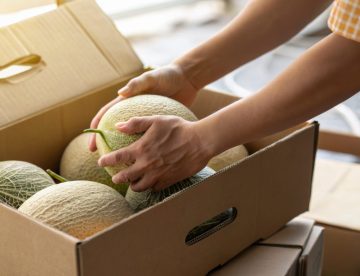
At first glance, a produce box may not look very different from a standard cardboard shipping box. Both are made from corrugated cardboard, both protect products during transportation, and both can be customized in different sizes. However, once fresh fruits and vegetables enter the equation, the similarities end quickly. Produce continues to change after it has been harvested, which means the packaging has to do much more than simply contain the product.
Unlike manufactured goods, fresh produce is affected by moisture, temperature, airflow, handling, and stacking pressure at every stage of the supply chain. A cardboard box that performs perfectly for clothing, electronics, or household items may actually shorten the shelf life of blueberries, tomatoes, or leafy greens. This is why produce boxes are engineered around the behavior of fresh products rather than around the convenience of shipping alone.
Fresh Produce Continues Changing Long After Harvest
One of the biggest misconceptions about produce packaging is that harvesting marks the end of the product’s lifecycle. In reality, fruits and vegetables remain biologically active after they are picked. They continue releasing moisture, exchanging gases with the surrounding environment, and responding to temperature changes. The cardboard box becomes part of that environment, influencing how well the product maintains its quality before reaching retailers or consumers.
Consider two products harvested on the same morning. One is packed into a standard shipping carton designed for general merchandise, while the other is placed in a produce box with ventilation designed specifically for agricultural products. Both shipments travel the same distance under refrigerated conditions. By the time they arrive, the difference may not be obvious from the outside, but inside the cartons the conditions are very different. The produce box has allowed air to circulate more consistently, helping maintain a more stable environment throughout transportation and storage.
This is why produce packaging cannot be evaluated only by its strength. A very strong cardboard box that traps moisture may perform worse than a properly engineered produce box that balances structural support with ventilation. Fresh produce requires packaging that works with the product’s natural characteristics rather than against them.
The Design Details Most Businesses Never Notice
Many of the features found on produce boxes exist because of years of practical experience rather than appearance. Die-cut holes, for example, are often associated only with carrying the box more easily. In reality, their placement is carefully considered because they influence airflow across the product while also making repeated handling safer and more efficient.
The proportions of produce boxes are equally intentional. A deeper carton is not automatically better simply because it holds more product. Overfilling blueberries, peaches, or tomatoes increases the amount of weight resting on the bottom layers, making bruising more likely before the shipment even reaches its destination. For that reason, many produce boxes are designed around optimal product depth rather than maximum capacity.
Even the strength of the corrugated cardboard is selected differently than it would be for many industrial products. Agricultural shipments are often stacked for extended periods inside refrigerated storage or during transportation. The packaging needs to maintain its structure despite changes in humidity and temperature, allowing pallets to remain stable throughout the distribution process.
Choosing Produce Boxes Based on the Crop, Not Just the Shipment
Selecting produce boxes should begin with understanding the product itself rather than simply measuring its dimensions. Different crops create different packaging requirements, even when they occupy similar amounts of space.
Several factors should always be evaluated before deciding on a produce box:
- How sensitive the product is to pressure. Blueberries, raspberries, peaches, and tomatoes benefit from packaging that limits excessive stacking pressure, while more robust vegetables may tolerate different configurations without compromising quality.
- How much airflow the crop requires. Some products generate more moisture than others during storage and transportation. Choosing a produce box with appropriate ventilation helps maintain more stable conditions throughout the supply chain instead of relying entirely on refrigerated transport.
- How the product will move after harvest. A shipment traveling directly to a nearby retailer has different packaging demands than produce crossing multiple distribution centres. The longer and more complex the journey, the more important structural consistency becomes.
- How the boxes will be handled operationally. Farms with high-volume harvest periods often move the same produce box dozens of times before it leaves the facility. Easy handling, stable stacking, and consistent dimensions reduce unnecessary interruptions during busy harvesting days.
Looking at these considerations together often changes the packaging decision entirely. Instead of asking which cardboard box is available, businesses begin asking which one best supports the way their product will actually be harvested, stored, transported, and sold.
The Best Produce Packaging Supports the Entire Supply Chain
Well-designed produce boxes are rarely noticed when everything goes according to plan, and that is exactly the point. Their job is to support every stage between the field and the customer without creating additional challenges for growers, warehouse teams, distributors, or retailers.
When packaging is chosen with the entire supply chain in mind, cooling becomes more consistent, pallet loads remain more stable, handling becomes easier, and products arrive looking the way they did when they left the farm. Those improvements rarely come from one dramatic design feature. They are the result of many small decisions working together to protect product quality while making daily operations more efficient.
Produce Boxes
Fresh produce deserves packaging designed specifically for the way it is grown, handled, and transported. Racer Boxes manufactures durable corrugated produce boxes for businesses across British Columbia, helping growers and distributors protect product quality while improving efficiency throughout the supply chain. Whether you need stock produce boxes or custom solutions for your operation, our team can help you find packaging that works as hard as the products inside it, click here and request a quote.
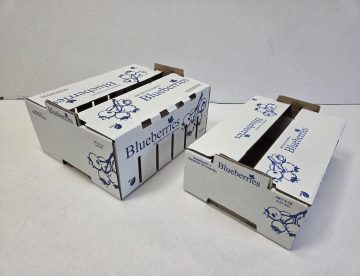
Blueberries are one of the most sensitive products to handle at scale. They respond quickly to pressure, moisture, and movement, and small issues during handling tend to show up later as reduced shelf life or inconsistent quality. When damage appears, it is often attributed to transport conditions, but in most cases, the process starts breaking down earlier, during packing and palletizing.
For blueberry farms in Langley, this becomes more critical during peak season. Harvest speed increases, volume grows, and decisions made at the packaging level begin to influence everything that follows. At that point, cardboard produce boxes are no longer just a container. They shape how the product behaves throughout the entire flow, from field to final delivery.
Where Damage Actually Starts in the Process
Damage in transit is usually the result of accumulated stress rather than a single failure point. Blueberries are handled multiple times in a short period, and each stage adds a layer of pressure, movement, or environmental exposure. When the packaging does not support those transitions properly, the fruit begins to degrade before the shipment even leaves the facility.
One common issue is how pallets are built under time pressure. During peak harvest, boxes are stacked quickly, often without time for adjustment. If the packaging does not hold its shape consistently, weight distribution becomes uneven and the load shifts more easily during transport. This creates internal movement that is not always visible but affects the fruit over time.
Another problem comes from how boxes interact with storage conditions. Even when cooling systems are working properly, inconsistent airflow within the pallet can create pockets of moisture. Some areas remain stable while others retain humidity, leading to uneven product quality within the same shipment. By the time the boxes are opened, the issue looks like a transport failure, even though it started during storage.
What Changes When Packaging Supports the Operation
When cardboard produce boxes are aligned with real operating conditions, the impact shows up across the workflow, not just at the moment of packing. Instead of requiring constant adjustment, the packaging supports consistency, which reduces the number of small interventions needed throughout the process.
In practice, this means pallets can be built faster without sacrificing stability. Boxes behave predictably when stacked, which allows teams to maintain speed without second-guessing how the load will hold. During transport, the shipment remains more stable, which reduces internal movement and lowers the risk of product shifting under pressure.
There is also a noticeable difference during transitions between stages. Moving product from field to storage, from storage to loading, and from loading to transport involves repeated handling. When boxes are easier to grip and reposition, those transitions become smoother and less disruptive. The result is not just fewer visible errors, but a more controlled process overall.
What Blueberry Farms Should Evaluate Before Ordering Produce Boxes
Choosing cardboard produce boxes becomes more effective when decisions are tied directly to how the operation runs, rather than to general packaging assumptions. A few factors consistently influence how well the packaging performs once it is in use:
- Harvest rhythm: faster operations need boxes that can be assembled, filled, and stacked without slowing down the process;
- Pallet behavior: boxes should create stable loads without requiring constant adjustment during stacking;
- Storage interaction: packaging should allow consistent airflow across the pallet, not just within individual boxes;
- Handling frequency: the more a box is moved, the more important grip and structural consistency become;
- Load predictability: repeat orders should behave the same way, so teams do not need to adapt each time.
For example, a farm that packs quickly during peak hours benefits from boxes that hold their shape without adjustment, allowing pallets to be built continuously. Another operation that relies heavily on cold storage may prioritize airflow across stacked units to maintain consistent conditions. In both cases, the packaging decision is tied to how the system operates, not just to the product itself.
How Small Inefficiencies Turn Into Product Loss
Most packaging-related losses do not come from obvious failures. They come from small inefficiencies that repeat over time. A box that shifts slightly during stacking, a pallet that requires constant correction, or a load that does not remain stable during transport will gradually affect the product without creating a single clear point of failure.
These issues are difficult to track because they do not happen all at once. They build over the course of handling, storage, and movement. By the time the fruit reaches its destination, the result appears as general quality loss rather than as a specific packaging problem. This is why packaging decisions need to be evaluated in context, looking at how they influence the entire process rather than isolated moments.
Cardboard Produce Boxes for Blueberry Farms
Preventing damage in transit starts with understanding how blueberries move through the operation and where stress accumulates along the way. The right cardboard produce boxes help stabilize that process, reducing variability and supporting more consistent handling from harvest to delivery.
Racer Boxes works with farms and produce businesses across British Columbia to provide corrugated produce boxes designed for real conditions. If you are preparing for the blueberry season in Langley and want to improve how your shipments perform, our team can help you define the right solution for your operation, get in touch!
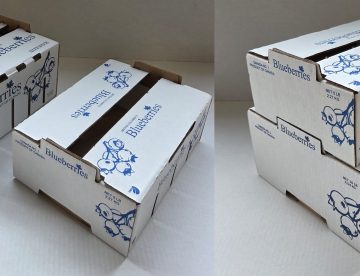
Blueberry season in Langley compresses a lot of decisions into a very short window. What might seem like small operational choices before the harvest begins tends to scale quickly once volume increases. Packaging is one of those decisions. The type of cardboard produce boxes used during the season directly affects how efficiently the fruit is handled, how well it holds up during transport, and ultimately how it is perceived by buyers and retailers.
Many farms only revisit their packaging setup when problems start to appear. Crushed berries, moisture buildup, unstable pallets, and slow packing lines are usually symptoms of a packaging system that was not designed for the realities of the operation. When the right cardboard produce boxes are in place, those issues tend to disappear before they start, because the packaging is working with the process instead of against it.
What Actually Makes a Difference in Produce Packaging
For blueberries, packaging performance is defined by a combination of structure, airflow, and handling. Corrugated cardboard boxes built with ECT32 strength provide the level of durability needed for stacking and transport, especially when pallets are built quickly and moved multiple times throughout the day. At the same time, strength alone is not enough. Without proper ventilation, even the most durable box can contribute to product loss.
This is where die-cut holes become functional rather than optional. Their placement allows air to move through the box, helping regulate moisture and temperature during storage and transport. This is particularly important for blueberries, which are sensitive to condensation and can degrade quickly if airflow is restricted. The same design also improves handling. Boxes that are easier to grip reduce drops and unnecessary pressure, which has a direct impact on product quality over the course of the season.
Another factor that often gets overlooked is consistency. When cardboard produce boxes come from the same production batch and follow standardized sizing, palletizing becomes more stable and predictable. This reduces shifting during transport and makes storage more efficient, especially in cold environments where airflow between boxes also matters.
How to Choose Cardboard Produce Boxes Based on Real Use
The right packaging choice usually becomes clear when you look at how the product moves from the field to its final destination. Instead of focusing only on dimensions or price, it helps to evaluate how the boxes will behave under real conditions:
- Harvest flow: Operations that move quickly benefit from boxes that are easy to assemble, stack, and reposition without slowing down the pace of work
- Product protection: Blueberries require a balance between capacity and depth, since excessive weight in a single box increases the risk of compression
- Ventilation needs: Proper airflow is essential to reduce moisture buildup and extend shelf life, especially during storage and transport
- Stacking stability: Consistent sizing and structural strength help prevent pallet movement and reduce the risk of collapse
- Transport distance: Longer routes increase the importance of durability and internal stability, since the product will be exposed to more handling
Looking at these factors together usually leads to better decisions than focusing on a single feature. Packaging that performs well across all these points tends to reduce losses and improve efficiency at the same time.
Where Packaging Becomes a Business Advantage
Once the operational side is solved, packaging starts to play a different role. Cardboard produce boxes are also one of the few elements that travel with the product all the way to the buyer. This makes them a subtle but consistent touchpoint for positioning.
Even simple customization, such as clean printing or consistent visual identity, can make a difference when your product moves through distributors, retailers, or direct sales channels. It signals organization, reliability, and attention to detail. In a competitive market like Langley, where many farms are producing similar products, these signals help create differentiation without changing the product itself.
There is also a growing expectation around sustainability. Corrugated cardboard boxes align naturally with this, offering a recyclable solution that fits both operational needs and market expectations. When packaging meets both performance and environmental criteria, it strengthens the overall perception of the business.
Cardboard Produce Boxes for Blueberry Farms
For farms and producers, packaging is an essential part of the operation, not just a final step. The right cardboard produce boxes help preserve quality from harvest through delivery, minimize product loss, and keep workflows running smoothly during peak season. Racer Boxes partners with businesses across British Columbia to provide durable, thoughtfully designed blueberry produce packaging that stands up to real-world conditions.
We also make it easy to order what you need so there’s no requirement to purchase a full pallet. We keep generic blueberry boxes in stock, so you can buy exactly the quantity that works for your operation.
If you’re getting ready for the blueberry season in Langley or want to improve your current packaging setup, reach out to our team to find a solution tailored to your needs.