

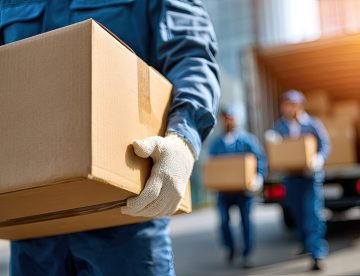
A box that works perfectly for deliveries around Vancouver can start showing problems as soon as the same product is shipped across the country. That does not necessarily mean the original packaging was poorly designed. It may simply have been designed for a very different journey.
Local deliveries are often relatively predictable. Products may leave a warehouse, travel in the same vehicle for a few hours, and arrive directly at a store or customer. Shipping across Canada can introduce sorting facilities, transfers between vehicles, longer periods in storage, repeated handling, and more time spent underneath or beside other packages. When the route changes, the demands placed on the cardboard box change with it.
Boxes In Vancouver Can Have Very Different Jobs
When businesses first contact us about packaging, understanding where a box is going is just as important as knowing what will be inside it. Two companies shipping identical products could need different corrugated packaging simply because one delivers locally using its own vehicles while the other sends orders to customers throughout Canada.
Consider a Vancouver food producer supplying independent retailers in the Lower Mainland. Orders might be packed at the facility in the morning, loaded into a company van, and delivered directly to several stores that afternoon. Employees control how the cartons are loaded, drivers know what they are carrying, and the boxes may only be stacked once before reaching their destination. A packaging design that performs consistently under those conditions is doing exactly what it was intended to do.
If that producer later begins accepting wholesale orders from Alberta, Ontario, or Quebec, the product has not changed, but the distribution system has. Those cartons may now spend days moving through a carrier network, be transferred several times, sit in distribution facilities, and encounter loads the business cannot control. Simply continuing to order the same box because “we’ve never had a problem with it” ignores the fact that the box has effectively been given a new job.
Distance Is Not Usually The Biggest Difference
It is tempting to assume that a cross-country shipment requires different packaging simply because it travels farther. Mileage alone, however, tells us surprisingly little about what happens to a carton. A box can travel hundreds of kilometres in a controlled palletized load and experience less handling than one travelling a much shorter distance through several parcel facilities.
What matters is the shipping path. A locally delivered carton may remain in the same orientation from packing table to customer. A parcel shipment can move from conveyor to truck, truck to terminal, terminal to another conveyor, and eventually into a delivery vehicle. Along the way, it can be placed on different sides, pushed against other packages, or temporarily carry weight from cartons that were never part of the shipper’s original stacking plan.
This is why we want to know how a customer intends to ship before recommending changes to the packaging. If orders will remain palletized until they reach a distributor, we may be thinking about compression and pallet stability. If individual boxes enter a parcel network, repeated handling and movement inside the carton become much more important. “Shipping across Canada” describes the destination, but the route to that destination tells us far more about what the box will actually experience.
The First Failure Often Happens Inside The Box
When businesses begin shipping farther, they sometimes respond to damage by immediately asking for thicker or stronger corrugated cardboard. Sometimes additional strength is appropriate, but external damage is only part of the equation. The product may be moving inside a perfectly intact carton.
Imagine a company that sells small metal components and has successfully delivered them to local industrial customers for years. The cartons arrive looking fine because the boxes remain upright and employees pack them carefully into company vehicles. Once those same products begin travelling individually through a carrier network, the empty space that never caused trouble locally becomes much more significant. Components can shift repeatedly, concentrate their weight against one wall, and eventually damage each other or the carton from the inside.
In a situation like that, simply increasing board strength may treat the wrong problem. Adjusting dimensions, changing how products are arranged, adding appropriate internal components, or dividing the contents can sometimes make a greater difference. Before changing the box specification, we want to understand exactly what failed and where. A crushed corner, a split seam, an intact carton containing damaged goods, and a box that has lost its shape under stacking pressure are four different clues, not four versions of the same packaging problem.
What To Review Before Expanding Your Shipping Area
Businesses do not need to wait for damaged shipments to start evaluating their packaging. If you already know that products previously delivered locally will soon be travelling farther, a few practical details can help us determine whether the current boxes should remain unchanged or be reconsidered.
- Follow one shipment from the packing table to destination. Do not look only at the distance on a map. Identify whether the carton remains palletized, enters a parcel network, changes vehicles, passes through distribution centres, or is handled individually along the way. This gives us a much more realistic picture of the stresses the package may encounter.
- Look at how much unused space exists inside the current box. A small amount of movement that causes no issue during controlled local delivery can become significant after repeated handling. Pay particular attention to heavy, irregularly shaped, fragile, or multi-piece products.
- Record how cartons are stacked before and during transportation. A box sitting on top of a local delivery load has a very different experience from one placed near the bottom of a pallet or temporarily stacked beneath unrelated shipments. Weight, stack height, and time under load are useful information when evaluating corrugated construction.
- Keep damaged packaging instead of throwing it away immediately. Photographs are helpful, but an actual failed box can tell us much more. Where the board buckled, tore, punctured, or lost shape can help identify whether the issue relates to compression, movement, impact, closure, or another part of the packaging system.
- Test the packed box, not an empty sample. The relationship between the product and the carton matters. Assemble the packaging exactly as employees would for a real order, including inserts, dividers, void fill, tape, and the actual quantity of product. A box that feels sturdy when empty can behave very differently once weight is concentrated inside it.
Doing this before a major expansion can also help avoid overcorrecting. Not every business moving from local delivery to national shipping needs an entirely new packaging lineup. Sometimes the existing box is already suitable, while a particular product or shipping method requires an adjustment. The useful question is not whether national shipping automatically requires “stronger boxes,” but which conditions have actually changed.
Boxes In Vancouver
If your business is expanding from local delivery into regional or cross-country shipping, bring us your current packaging and tell us how those new orders will travel. Racer Boxes can review the products, existing boxes, packing process, and distribution route to identify what may need to change and what can stay exactly as it is. Contact our team before your next packaging order, and we can help you prepare boxes for the journeys your products are actually going to make.
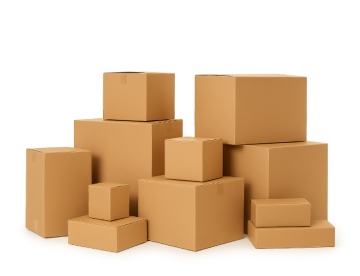
RSC cardboard boxes are often chosen because they are standard, cost-effective, and widely available. What is less obvious is how much impact they can have on productivity when they are properly specified and used. In operations that handle volume, packaging is not just about protecting products. It directly influences how fast items are packed, how efficiently space is used, and how stable shipments remain from origin to destination.
When packaging decisions are aligned with real operational needs, RSC cardboard boxes become part of the system that supports efficiency. When they are not, they tend to create friction that slows down processes and increases costs in ways that are not immediately visible.
How RSC Cardboard Boxes Improve Packing Speed
Packing efficiency is usually where the impact of RSC cardboard boxes becomes visible first. Their simple structure allows for quick assembly and sealing, which is essential in environments where speed and consistency matter. Unlike more complex formats, RSC boxes follow a predictable folding pattern, reducing the need for training or adjustment during the packing process.
This consistency becomes even more valuable when teams are working at scale. Boxes that open cleanly, hold their shape, and close without resistance allow workers to maintain a steady rhythm. When packaging is inconsistent, even small issues like misaligned flaps or uneven folds can slow down the process and create variation between packed units.
Another factor is how well the box fits the product. When dimensions are properly defined, the need for excessive filler is reduced, which speeds up packing and improves presentation. A well-fitted cardboard box protects the product while also simplifying the workflow, since fewer adjustments are needed during each packing cycle.
Storage Efficiency Starts with Box Design
Storage is often treated as a separate issue, but it is directly connected to how cardboard boxes are designed and produced. RSC cardboard boxes with consistent dimensions allow for more efficient stacking, which helps maximize vertical space and maintain stability over time. This is especially important in warehouse environments where space utilization directly impacts cost.
Uniformity across batches also plays a key role. When boxes vary slightly in size or strength, stacks become less stable and harder to manage. This leads to wasted space, increased handling, and a higher risk of collapse. On the other hand, when boxes are consistent, storage becomes more predictable and easier to organize.
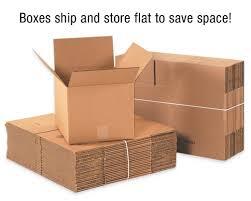
Flat shipping is another advantage of RSC cardboard boxes. They can be stored efficiently before use, reducing the amount of space required for packaging inventory. This becomes particularly relevant for businesses that purchase in volume, where packaging itself can take up a significant portion of storage capacity.
Shipping Performance and Cost Control
Shipping is where all previous decisions come together. The way cardboard boxes perform during transport determines whether products arrive in good condition and whether additional costs are created along the way. RSC cardboard boxes are designed to distribute weight evenly, which helps maintain structure during stacking and movement.
When boxes are properly specified, they reduce the risk of deformation and product damage. This has a direct impact on returns, replacements, and overall customer satisfaction. Poor packaging choices often lead to hidden costs that are only noticed after shipments start failing under real conditions.
There is also a cost dimension tied to efficiency. Well-designed cardboard boxes optimize how space is used within trucks and containers. When boxes stack cleanly and maintain their shape, more products can be transported in the same shipment, reducing logistics costs per unit. Over time, this becomes a significant advantage for businesses that operate at scale.
Key Factors That Drive Efficiency in RSC Cardboard Boxes
The performance of RSC cardboard boxes depends on how well they are aligned with the operation. A few factors consistently influence whether they improve efficiency or create unnecessary friction:
- Box dimensions: Proper sizing reduces empty space and minimizes the need for filler;
- Board strength: Adequate structural support ensures stability during stacking and transport;
- Consistency: Uniform production across batches improves predictability in packing and storage;
- Ease of assembly: Boxes that fold and close easily support faster packing workflows;
- Print clarity: Clear labeling helps with identification, handling, and scanning in logistics environments.
When these elements are considered together, packaging becomes a tool for efficiency rather than just a requirement. Ignoring one of them often leads to adjustments later in the process, which increases both time and cost.
Where Efficiency Actually Shows Up in Daily Operations
The impact of RSC cardboard boxes becomes clear when you look at how they behave during a full day of use. In high-volume environments, efficiency is not measured by one action, but by repetition. A box that saves a few seconds during packing, stacks more cleanly, or reduces small adjustments during transport ends up making a noticeable difference over hundreds or thousands of units.
For example, when boxes are consistent in size and structure, pallet building becomes faster and more stable without needing constant correction. When they hold their shape under weight, there is less need to double-stack cautiously or redistribute loads. These are not isolated improvements. They reduce friction across the entire workflow, allowing teams to maintain speed without compromising stability or product protection.
This is where packaging stops being a passive element and becomes part of operational performance. Instead of reacting to issues, businesses that use well-specified cardboard boxes tend to operate with fewer interruptions, which is what ultimately drives efficiency at scale.
Custom RSC Boxes in Langley
Efficient operations depend on packaging that performs consistently in real conditions. Racer Boxes works with businesses across British Columbia and Washington to deliver custom RSC cardboard boxes designed for reliability, accuracy, and performance at scale. If you are looking to improve packing speed, optimize storage, and reduce shipping costs, get in touch with our team and we will be glad to help you define the right solution for your operation.
Ordering custom RSC boxes is often treated as a straightforward step. The format is familiar, widely used, and easy to specify at a basic level. That simplicity is exactly what leads many businesses to overlook how much these decisions affect day-to-day operations. Once the boxes are in use, they stop being a line item and become part of the system that supports packing, storage, and delivery.
Most of the problems companies experience with cardboard boxes do not come from manufacturing errors. They are usually the result of decisions made too quickly at the ordering stage, without considering how the packaging will perform in real conditions. When volume increases, those small oversights turn into recurring issues that impact efficiency, product protection, and overall consistency.
Where Most RSC Box Orders Break Down in Practice
A common mistake is defining the box only by its dimensions. While size is essential, it does not determine how the box behaves once it is filled, stacked, and moved. A box can technically fit the product and still fail when exposed to weight, pressure, or repeated handling. This is especially noticeable in operations where boxes are palletized and transported over longer distances, where structural stability becomes critical.
Another frequent issue is selecting board strength based on price rather than performance. Lower grade cardboard may reduce cost per unit, but it often leads to deformation during stacking or transport. These failures rarely show up immediately. They appear when boxes are used at scale, which is when the cost of replacing damaged products or adjusting operations becomes much higher than the initial savings.
Printing decisions also tend to create problems when they are not adapted to corrugated material. Designs that rely on small text, fine lines, or low contrast often lose clarity when printed on cardboard. The result is packaging that feels inconsistent with the brand’s intended image. Since these boxes are often the first physical interaction with the product, the impact of poor print execution is more significant than it appears at the design stage.
How to Define the Right Specifications from the Start
Avoiding these issues requires treating cardboard boxes as part of a system rather than a standalone purchase. The objective is to ensure that packaging supports how the product moves through the operation, from packing to storage to delivery. When specifications are defined with that perspective, the result is a solution that performs consistently under real conditions.
There are several factors that should always be considered together when ordering custom RSC boxes:
- Product characteristics: weight, shape, and fragility determine the level of structural support required
- Packing workflow: boxes should be easy to assemble and close without creating friction in the process
- Stacking conditions: consistent sizing and adequate strength are essential for pallet stability
- Transport exposure: longer or more complex routes increase the need for durability and resistance to pressure
- Printing application: graphics and text should be designed for clarity on corrugated surfaces
- Order planning: maintaining consistency across batches reduces variation and improves operational predictability
Looking at these elements in isolation often leads to incomplete decisions. When they are evaluated together, the packaging becomes more reliable and better aligned with actual use.
Why Execution and Consistency Matter More Than Expected
Even when the specifications are correct, execution determines whether the boxes will perform as intended. RSC boxes depend on precision in cutting, folding, and printing, and small variations tend to show up only when the boxes are used at scale. A slight difference in height, for example, can make pallets uneven, which leads to shifting during transport and increases the risk of damage, even if the box itself seems structurally sound.
These issues also appear quickly in the packing process. If the scoring is inconsistent, some boxes will fold easily while others resist or don’t align properly when closing. In practice, this slows down the team, creates variation between packed units, and forces workers to compensate manually. Over a full day of packing, that small inconsistency turns into lost time and reduced efficiency.
Printing execution can create similar friction. If labels or product information are not consistently aligned or clear, teams may struggle to identify products quickly or scan barcodes without repositioning the box. This becomes especially problematic in warehouses or distribution environments where speed and accuracy are critical.
Consistency becomes even more important with repeat orders. If one batch stacks well and the next compresses slightly under weight, teams need to adjust how they build pallets or handle boxes, even though nothing officially changed. That kind of variability is hard to track but easy to feel in daily operations.
A simple way to avoid this is to test boxes in real conditions before scaling the order. Fill them, stack them, and move them the same way your team would during a normal day. This reveals issues early and ensures that what works in a sample will work in practice.
Custom RSC Boxes in Langley
RSC boxes may follow a simple structure, but their performance depends on how well they are specified and produced. Racer Boxes works with businesses across British Columbia and Washington to deliver custom RSC boxes with consistent quality, accurate printing, and reliable performance in real conditions. If you are planning your next order and want to avoid the common issues that affect packaging at scale, our team can help you define a solution that fits your operation. Get in touch!
Industrial packaging plays a vital role in the global supply chain, ensuring that heavy-duty goods reach their destination safely and intact. However, as businesses adapt to a changing world, there’s a growing demand for packaging solutions that meet both the strength requirements of industrial products and the environmental standards valued by today’s consumers. Balancing durability…
Listening our clients demand and needs, as Vancouver box manufacturer and box printer, now we provide moving and packaging supplies for the Vancouver Area. By listening to our client’s needs, we have expanded our services in providing wholesale supplies to our extended service list. Our high precision quality and service flexibility ensures that we have…